















With so many applications of AI now available, leaders from Kingfisher Group, Puma, Fabletics, Our Co-op, Bensons for Beds, CDS Superstores, and more share how AI is driving real returns on investment, how they’re adapting their businesses, and advice to act on the AI opportunity
Kingfisher
Kingfisher has been riding the AI train for a long time and introduced an AI agent for its French brand Castorama, “Hello Casto”, in December 2023. Its digital and ecommerce director Romain Roulleau said the group sees 130% more conversion from those using the agent over the ones that aren’t using it.
“The level of disruption that AI is bringing is at least five to 10 times bigger than the disruption digital caused in the whole retail industry,” he said. Now the group is turning its attention to making products visible for customers on AI platforms such as ChatGPT and Gemini.
Fabletics
The influence of agentic commerce, where AI can browse, shop and even transact on behalf of consumers, is continuing to grow. For athleisure brand Fabletics, while the etailer is using AI to optimise its website, it sees AI’s power extending way beyond this. Senior director, ecommerce Europe Sandra Kahlert said, “companies need to realise and understand that a lot of things are happening outside of the website with AI search”. “We see customers – including myself – heading to ChatGPT to ask queries such as ‘where can I get the best leggings?’ so we’re adapting to stay relevant.”
Retailers concerned about AI agents needn’t be according to Vic Peppiatt, co-founder of the UK’s first AI-powered fashion search engine Hey Savi, who asserted AI “isn’t a threat, it’s a brilliant new [customer] acquisition channel”.
Cymbio by PayPal chief executive and co-founder Roy Avidor shared this view and urged retailers to “get your products ready for agents” as “these are your new customers”.
Puma
The customer is at the heart of every decision retailers make, and when implementing AI agents into your business, this is more important than ever. Puma debuted an AI-powered digital concierge called “Dylan” back in April, but its director of consumer experience and digital product Falko Saft still recognises the need for a human connection. He said culture, community and what a brand is about comes from the human team – not agents.
Thomas Valette, senior advisor of retail and digital commerce at AI product development firm Forte Group, agrees that the AI agent is a tool and not a solution. He added that agents aren’t there to reduce headcount, but giving staff back time “so they can take care of the customer.”
Bensons for Beds
More retailers are leveraging technology throughout the store, and Bensons for Beds chief financial officer Joseph Hennigan says teams across the retailer’s store estate now have a 98% adoption and completion rate of its AI-enabled platform focused on task management and colleague engagement.
For Nobody’s Child founder Andrew Xeni, he admitted he was “frustrated” with the rate of AI adoption across its frontline as the business is still early in its physical retail journey. He has been reassuring his team that AI is not there to replace staff and said the fashion retailer will be embracing the tech to help double in size in the next 12 to 18 months.
This focus on empowering colleagues with AI was echoed by Motorola Solutions Theatro Lead EMA Rich Kelly, who said he wanted retail to see AI as an enabler to unlocking frontline productivity. “We want every single retailer that’s operating a store to be heads up and hands free, not looking at a piece of technology, being able to actively engage at a human level with the customer.”
Our Coop
AI tools will fail without organisational buy-in, training and workflow change, and retailers are reframing AI stories away from pure technology procurement towards culture and adoption.
Selina Butterfield-Mashoofi, chief finance, technology and property Officer at Our Coop said that while AI is enabling vast productivity for its store staff, “Give us two hours of your time, and we’re going to give you back four hours of your time” – the emphasis for successful implementation is on staff onboarding. “We won’t give Copilot Pro to anyone who hasn’t been on one of our AI-first courses where they’re taught about using AI safely”, Butterfield-Mashoofi shared.
Guardrails are important, too. Patrik Silen, chief transformation & IT officer at Europe’s largest pet care chain Fressnapf | Maxi Zoo has implemented AI-powered “vet bots” across its 3,000 stores that answer customer queries. These “bots are trained on vet-approved content and have to give references for the advice they provide”, said Silen, to ensure the quality of advice, while customers with specific queries will be passed onto a human colleague where necessary. Silen highlighted that he doesn’t think retailers should focus on isolated AI and should make it “part of a bigger change as that makes it more impactful.”
AI is not a magic wand, and leaders must “sense, analyse and act” to deploy the best applications, said Jason Harvey, vice president of AI and automation at AI workforce solutions specialist Zebra Technologies. “You can boil the ocean with AI, and you go nowhere,” he emphasised.
Oracle
Investing in good foundations is what will differentiate AI’s winners and losers, according to Oracle global vice president retail product Paul Woodward.
Having worked with major retailers to deploy AI, Woodward said “investing in the foundational pieces is fundamental” and added that “layering AI over the foundation of your core system of record, your core business rules, compliance and the way in which you come to market is one of the things that’s going to make that AI successful because it understands you and then your market.”
To turn AI into ROI, Woodward urged retailers and brands to “start with the outcome and be precise” rather than throwing AI at everything: “Don’t try and go, hey, let’s put 100 AI capabilities into the organisation this year.”
Alibaba.com
Alibaba.com France managing director Michelle Lau agreed with this approach and said that – based on what had worked for the global online marketplace – it was advisable retailers “identify just one single kind of repetitive, very manual process that you can actually find an AI to help you to solve.”
AI should also be there to support human decisions rather than replace them, Lau noted. “AI should not remove the human elements or human judgement because AI can actually take care of a lot of repetitive, very labour-intensive tasks.” Similarly, Lau has found that for Alibaba.com, managing agents in the agentic platform is not very different from managing human teams. “We need to actually keep an eye on what they are doing”, she advised.
Compleat Food Group
Retailers are beginning to reap the benefits of connecting AI to their inventory and order systems, using it to handle complex workflows, monitor warehouse robots, simulate ‘what if’ scenarios, and more.
This is the case for Compleat Food Group, the FMCG parent of brands such as Wall’s and The Real Soup Co. Its digital and AI strategy director Ines Ashton shared multiple use cases the business has been using to “hack” its supply chain.
This includes building its own AI-powered HR chatbots and health and safety chatbots to “cross pollinate information across its brands” quickly and bring newly acquired companies in its group up to the same standard. AI has also driven compliance and productivity in its warehouses. Ashton explained that the group has deployed an AI on top of its warehouse CCTVs to track both health and safety compliance and technical compliance because its teams “cannot be everywhere at once.”
“With technical compliance such as checking the oil temperature of a fryer, if nobody comes within 30 minutes to check, our AI sends a notification [which the team then follow up with]”, Ashton explained.
N Brown
N Brown’s group technology director Chris Williamson revealed that AI is allowing the retailer to “do more with less” and described it as “a real superpower for the organisation.” The priority for his team now is to learn how to embed AI and drive business value out of it with data core to future strategy.
This echoes wider sentiment. Ask a retailer, AI expert, or tech vendor how to get the best out of AI, and many will say it’s the data and foundations that need to be executed correctly first. “An AI model is only as good as the data you feed it”, according to management consultancy d-fine manager Martin Tafelmeyer, and retailers are understanding just how powerful AI and data can be.
CDS Superstores
Both The Range’s parent company CDS Superstores and The Very Group have embedded AI into product discovery and shared their learnings on how to get the best out of the tech.
For CDS Superstores’ group chief digital and marketing officer Ben Exall, a key learning was knowing where to start. He advised: “Don’t start with technology, start with a business problem.”
The Very Group lead product manager of product discovery Kathryn Jones said that introducing AI won’t automatically change the way teams work. She said: “We could bring in the best AI possible, but if the teams continue to work in the same way that they’ve always done, then you could end up limiting what the technology is there to do.”
However, the closing message was clear. AI is here to stay and retailers need to adapt their strategies for it, particularly where search and discovery is concerned. Jonathan Gilbert, UK B2C lead at marketplace solution specialist Mirakl said he believes that if retailers are not optimising production information for AI, “you’re basically becoming invisible at the end of the day”.
“It’s really about making sure that you are set up to be in a position where you are being recognised and you are being recommended”, he added.
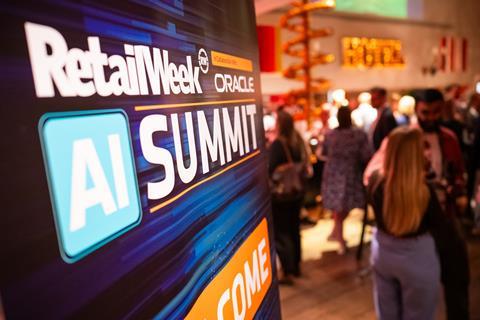
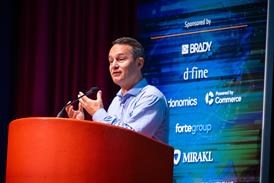
The retail leaders and industry specialists quoted were speaking at Retail Week’s inaugural AI Summit on September 30, at London’s Ham Yard Hotel. Providing a much-needed forum for discussion and impactful AI use cases, the full-day event united the retail-ecosystem and was hosted in partnership with headline sponsor Oracle and partners Brady, d-fine, Feedonomics powered by Commerce, Forte Group, Mirakl, Motorola Soltutions, PayPal, Sona and Zebra Technologies.



No comments yet