












Pets at Home chief executive Lyssa McGowan sits down with Retail Week to discuss what to expect from the retailer’s digital transformation, its 2,500 staff-member consultation, and where it’s at with new stores and personalisation

You’re through the bulk of your digital transformation, which features are driving the most growth?
The big standout success so far – we’ve got a lot more still to come − is actually Easy Repeat. Our subscription revenues on Easy Repeat have grown significantly, up 35% last year and increased again post year-end.
We’ve got better experience and functionality, and we basically completely overhauled the proposition. We now have 5,000 products on Easy Repeat, and you get a simple 10% off when you click and collect and 5% off when you have it delivered to home.
We also improved a lot of the backend processes, so things like out-of-stock substitutions will make you a recommendation using our data or using what you’ve put into the platform. Those are typical pain points in subscriptions, and what we’ve seen is an uplift in subscribers and uplift in frequency – customers that are on Easy Repeat shop with us 50% more frequently. In exchange for the discount we get the frequency, and everybody’s a winner.
About four weeks ago, we actually launched that in-store, which is a really market-leading capability. The consumer gets great discount, our colleagues get to talk to our customers about Easy Repeat and set them up, and you get much better distribution economics because obviously it’s delivered to store rather than to their home. It’s all wrapped up in this technology platform, which means they can easily skip, amend, add to their order, and we’ve plugged in our data to help make personalised recommendations.
Since we’ve launched that in-store, we’re actually signing up over 1,000 customers every single day.
What has the response to that been?
The response has been fantastic; 1,000 customers a day and, really pleasingly, they are coming in more frequently. Online, more than half of our customers choose a four-to-12-week frequency. But in-store, more than three-quarters are choosing two-to-four weeks. So these are really frequent purchases, and over 90% of them are choosing to click and collect, which is fantastic because they’re coming into store, which means they’re doing more of their pet shopping – more of their share of wallet – with us.
We’ve now got digital squads in-house. They’re releasing functionality every day, releasing features every day. So the site’s getting better, it’s getting faster, it’s a better consumer experience. We’re unleashing our first-party data for personalisation.
The journey from here is really exciting, and I think it proves why making the move to not just a new digital platform – we could have re-platformed something else, third-party or external – but why doing it in-house, putting all of that effort into the new tech was so worth it. We are able now to deliver things that no other retailer actually can at the moment.
Where are you with personalisation?
I think we’re still in the foothills of that, but there are a couple of areas where we’ve started to use it. Recommendations used to be – we just had a third-party recommendation engine on our old website. We’ve now unleashed all of our data to make recommendations better. We’re not just using the 15% of transactions that go through the platform; we’re actually using the 85% of transactions that go through store to make our recommendations better.
When we do things like four days before you get an Easy Repeat, we’ll send you an email saying, “Would you like to add anything to this order? You’ll get your 5% or 10% off, and it’s obviously free delivery or free click and collect.” We’re using our data to craft those in a really personalised way – things that we think you might need or want to add to your order. We’ve seen really significant uplift based on the recommendations and on the add-to-order.
But as I say, we’re just in the foothills. In time, we’ll be able to personalise your whole experience.
You made some changes to your store staff structure earlier this year, and 2,000 roles were put into consultation as a result. Where are you at in this process and what has happened since?
These things are always difficult, but it’s gone surprisingly well. We’ve actually closed the collective consultation ahead of when we anticipated. Our colleagues were happy with all the changes. We’re still in a little bit of individual consultation, just mopping up the last few that may have been on holiday or on leave, but we’re really close to the end of that now.
Actually, the results have been really pleasing. Something like 10% of our assistant manager population, which was the layer that we took out, applied for promotion – and many of them have been successful. So we’re seeing accelerated promotion through the consultation. We’ve launched a new role called the customer experience lead, which we’re seeing really strong take-up of as well, and that’s going to form the real core of expert advice for customers as we move forward.
We put a huge amount of time and effort into making sure the consultation was fair, that people were treated really well, and that we retained our talent in a more simplified, de-layered structure and actually allowed people to thrive and grow in new roles. I think we’ve achieved that. So I’m actually really delighted about how it’s gone.
What we wanted to do is make sure that anybody that was an assistant manager today had that opportunity to apply for the Customer Experience Lead, and that nobody was worse off, and that we retained our talent. We’ve done it as one big, coherent change.
Around 10% would have been promoted to Deputy Manager, and then a good part of the majority of the remainder will have gone into Customer Experience Leads.
Have you lost many staff during this process?
The number that we have lost is way less than we expected, and less than if we look at other retailer comparables. When we went into this process, we were braced for some of our longer-serving colleagues to move on, and we haven’t seen anything like what we anticipated. So we’ve done a really good job of retaining our talent.
How are the refurbished stores performing and what are your plans for their roll-out? Where have you got to on the trials of smaller-format stores in London?
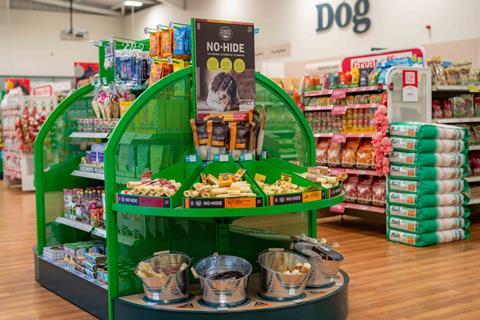
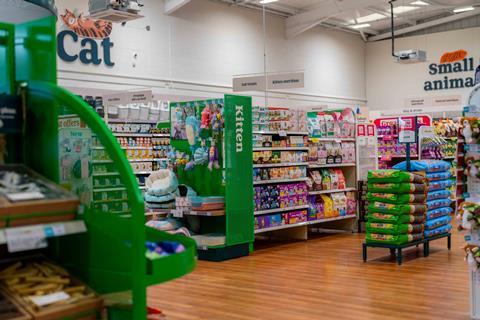
Those four new concept stores have been hugely successful. Really great consumer feedback and nearly everything that we put into those concept stores has been a success.
We’ll be rolling out more than 90% of what was in those concept stores through our rollout. We did 32 refits last year, we’ll do a similar amount this year, and we’re just going to take all of that concept store learning and roll it through our format.
Small formats still have a place, and where we can find them, particularly within the M25, we’ll continue with that. But our focus as well this year is on vets. We’re going to be doing 10 new vet openings and 15 extensions in vets. So it’s important that we balance, and actually what we really like to do is open up – if we can find them – sites for new pet care centres that have got everything in, or we retrofit vets into existing stores when we refit a pet care centre.



No comments yet